Ancient ancestors had it right

You know how they say we can learn from the past? That applies to so many things. War. Economics. Fashion. And yes, even gender.

Maybe, just maybe, previous generations were on to something. Like the Native Americans, who recognized five genders. FIVE!

I find that fascinating. I learned so much in a  great article my sister shared with me. (The whole article is here.) In a nutshell, many many years ago, Native Americans recognized these five genders: male, female, Spirit male, Spirit female, and transgendered. They weren’t just inclusive … the article said people then were REVERED for being different:

In fact, people who had both female and male characteristics were viewed as gifted by nature, and therefore, able to see both sides of everything.

Sadly, that acceptance went by the wayside when European Christians got into the mix and started enforcing their own gender roles onto others. Religious influence brought prejudice with it, and forced openly androgynous people into choosing to live as either male or female.

Know another interesting thing? The Native Americans weren’t alone. Other older cultures were also more open minded than we are today, and seemed to live in harmony that way for eons.

Check out an article in the New York Times about how a Mexican town recognizes three genders, and has for generations. “Muxes” are people are born into male bodies but who identify as neither male nor female. They’re not only not ostracized, they’re also recognized as special. And they have been accepted as part of the everyday culture for years. According to the article:

A mixed-gender way of life was accepted in several pre-Columbian communities across Mexico, according to anthropologists and colonial accounts. It is unclear when the muxe tradition originated in Juchitán, or how it endured.

Unfortunately, like our own recent news, a bathroom controversy is brewing in this small Mexican community. Students at a local university there have recently complained – claiming hygiene issues – and now muxes are left without a bathroom when they’re at school. I am intrigued by the fact that muxes are mixed on whether having a third bathroom is a solution. Some think it’ll ease tensions; others feel it will create a bigger divide.

That’s something I haven’t seen discussed much here in the US. It’s easy to assume that labeling a bathroom as ‘non-gendered’ would fix our recent fights and calm the fears.

But would it? Or would it simply serve to further ostracize a group that already feels like outsiders, often even in their own bodies?

I’m sad to think this small Mexican community, which for generations has accepted its own for who and what they are, now has had even a slight shift in how it views its mixed-gender residents. I can only hope that they’ll consider the past … and rethink the future.

I guess I wish that for all of us.


Trans-parent, See?

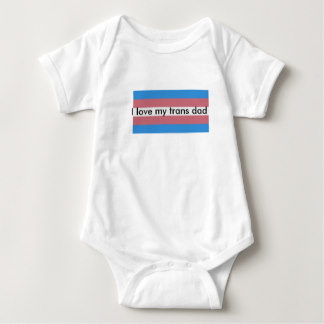
I was talking with a friend this week. He’s a trans dad and we discussed how that is different than any other father. I found it interesting that he doesn’t see many differences.

Sure, there’s the obvious: he didn’t actually father his son, because he’s trans. So like anyone who’s having fertility issues or for whatever reason doesn’t have a partner that can offer up those little swimmers, he and his wife used a donor.

They agreed his wife would carry the child, but that he would have a bigger say in who the donor would be. He’s half Japanese and wanted to find a donor that was too, so there was a greater likelihood that the baby would resemble him. But that’s something anyone who’s using fertility methods might take into consideration.

Are there issues? So far, no. Just some questions. My friend pointed out that there would come a time when he and his wife have to decide whether to tell their adorable son that his father is trans. There are definitely some decisions to make, but they’re not specifically related to my friends’ transition. Instead, they’re they same kinds of decisions any adoptive parent would have to make, or anyone else who came into parenthood in an alternative way: When and how to explain to a child how he or she came into being into its family.

I just found it really cool that … despite his transition … my friend sees himself as an ordinary dad with the same issues that any parent faces: keeping his child safe, raising a good kid, and being a role model for the next generation.

The more I learn about the transgender community, the more I learn they are so much more similar than many people think. They simply want to love and be loved, to accept and be accepted, and to live a good life. It seems the world at large still has a hard time seeing that, whether it’s due to a lack of understanding or choosing not to.

Are you a trans parent? Do you know one? I’d love to hear whether you’ve had a different experience than my friend. Perhaps by sharing it here, you’ll help someone else who’s facing a similar circumstance.

Happy Father’s Day to the trans dads out there. And to all the trans community, I will continue to learn – and do my best to educate others – about you.

With love and acceptance,

Lynn

School’s out but I’m still learning

Some of us are newer to the whole transgender world than others, and this blog post is meant for the newbies. While fully supporting the transgender community and trying to be more vocal about it, I’ve made a few mistakes without meaning to – either because I didn’t know better or I failed to think before opening my mouth. (Those who know me know that happens from time to time. My mouth opens before my brain can put the brakes on. Especially when it comes to chocolate, but that’s another story.)

I came across this from GLAAD, which covers things that allies should know.  I found it really interesting, so I thought I’d share it here for others who might also enjoy it. Think of it as a kind of “Ally 101” tip sheet. Some of it seems pretty damn intuitive to me — like, don’t “out” someone as trans, and don’t assume you know someone’s sexual preferences based on which gender they identify with. Duh. But there were a few interesting things I hadn’t really thought about.

For instance, do you know the differences between “coming out” as lesbian, bisexual, or gay and “coming out” as transgender? I guess I thought I did but I was wrong. (You heard it here first.) Here’s what GLAAD has to say:

“Coming out” to other people as lesbian, gay, or bisexual is typically seen as revealing a truth that allows others to know your authentic self. The LGB community places great importance and value on the idea of being “out” in order to be happy and whole.

When a transgender person has transitioned and is living as their authentic gender – that is their truth. The world now sees them as their true selves. Unfortunately, it can often feel disempowering for a transgender person to disclose to others that he or she is transgender. Sometimes when others learn a person is trans they no longer see the person as a “real” man or woman. Some people may choose to publicly discuss their lives in an effort to raise awareness and make cultural change, but please don’t assume that it’s necessary for a transgender person to always disclose that they are transgender in order to feel happy and whole.

This is a huge distinction and one I hadn’t really thought through, even with all of my good intentions. I guess I thought it would be liberating for them to disclose it, that it denotes a special strength inside to ‘come out’ and live their authentic life. I have much to learn.

I also liked the explanation of why you shouldn’t ask for a trans person’s name at birth:

For some transgender people, being associated with their birth name is a tremendous source of anxiety, or it is simply a part of their life they wish to leave behind. Respect the name a transgender person is currently using.

Perhaps because I’m a writer, I’ve always loved naming things. Pets, my children, and businesses. Words have power to me, and names are at the top of that list. So I might’ve wanted to know what their birth name was, and how they came up with their trans name, simply out of curiosity. Like, “How did you go from X to Y?” But I realize now, after reading that, it doesn’t matter. They are now “Y” for their own reasons which are none of my business. Point taken.

Thank you, GLAAD, for sharing these tips for those of us who are trying to learn. And thank you to the trans community for bearing with me and others who really do want to learn. This is uncharted territory for some of us and there are bound to be some hiccups along the way. But with time, love and acceptance, I hope we’ll get to a place someday where primers won’t be necessary. It’ll be second nature to us.


When “Counting” Means More than Numbers

I recently read an article about why the government cares about the number of Americans who are LGBT. It discussed how having an accurate count of the number of LGBT Americans could expedite changes in military policies, health care, grant funding and more. Important reasons, without question. And it makes perfect sense to me — after all, how can you adequately care for a population without knowing how large that population is?

BUT.

It also misses a crucial point, in my humble little opinion. Knowing how many of our fellow Americans are part of the LGBT community could mean recognizing that they are not some small, separate, segregated group that’s too inconsequential to matter. Dollars to doughnuts, I’d bet that if there were true, accurate and all-encompassing data available, the numbers of the LGBT community in this country are far greater than anyone realizes. Many of these people have chosen to stay silent for many, many reasons. Fear of discrimination. Fear of alienation. Fear of repercussions from family, friends, employers or places of worship. Fear of being attacked. Fear of being harassed about something as basic as using a bathroom.

Which means that too many of them haven’t felt the luxury of being honest about who they are. Luxury being the operative word there.

How sad is it that anyone in this day and age has to hide who they are for ANY reason? We like to think we’ve come so far as a society–and in many ways we have–but not in this one basic, HUMAN way. What if redheads were ashamed to let people know they had red hair and wore wigs to blend in? What if anyone with brown eyes wore sunglasses simply to hide their eye color because they were ostracized otherwise? These aren’t choices – they’re how we’re born. Those in the LGBT community are no different.

In my last post, I carelessly used the phrase “choose to live an alternative lifestyle.” I was mistaken for phrasing it that way, and I’m grateful a friend pointed it out to me. Those who are lesbian, gay or trans don’t CHOOSE to be so, anymore than I chose to be straight. They are who they are, just as I am. The difference is, I don’t have to hide it. Many of them don’t have that luxury … which is why the numbers that good ol’ Uncle Sam is trying to collect are not likely to be accurate any time soon.

I love that the government is trying to get this data, don’t get me wrong. It’s crucial that those who are LGBT be recognized as a legitimate community, with the same rights and benefits as the rest of us. Having those numbers can go a long way toward making that reality. I just venture a guess that the data the government comes up with won’t be truly representative, because so many people still feel they simply can’t speak up.

To those who do identify as any one of the letters in the LGBT world, my greatest wish is that, some day, you’ll feel the luxury of living your authentic life. If not, I understand why… I’m just so sorry you don’t feel you can. Uncle Sam’s numbers or no, I count you as important. You matter.


What’s in your paycheck?

So this is  LGBT month. President Obama signed the proclamation yesterday officially making June 2016 Pride month. It’s not the first time, of course … Pres. Clinton was the first to mark Pride month waaaay back in 2000. (Back then, it was just Gay and Lesbian Pride Month.) And then we didn’t mark it for eight years (not pointing any fingers here, but a different party was in office during that period), until Obama got it going again in 2009. His proclamation yesterday included this:

I urge the Congress to enact legislation that builds upon the progress we have made, because no one should live in fear of losing their job simply because of who they are or who they love.

This is paramount, in my mind. It’s about more than bathrooms and who can marry whom. Those are important topics, for sure, and I’ve blogged about them plenty. (Actually, I haven’t blogged so much about marriage equality. Look for that topic coming soon.) But that particular sentence … “fear of losing their job simply because of who they are or who they love” … that one kicked me in the gut.

Of course we’ve all heard about the military’s “Don’t ask, don’t tell” policy. In my naivete, I didn’t think much beyond the military when it comes to those who choose an alternative lifestyle. Someone you know is LGBT. Maybe it’s family, or a friend, or a co-worker, they’re gay or trans. So what? It has no impact on how well they perform at work or whether they’re capable of carrying out their duties. Why in the world should they fear being without a paycheck because of being gay, lesbian, or trans?

I’m glad that we have a month to celebrate LGBT Pride. I also hate that it’s necessary. If we could just accept each other for who we are, we could all feel pride all the time and wouldn’t need a special presidential proclamation to mark it. When I rule the world… 😉

Until then, I’ll just be glad I have a good job. And because I’m straight and CIS, I’ll thank my lucky stars I don’t have to worry about losing it based on who I am or who I love.


The battle schools didn’t see coming

Forget lesson plans and PTA meetings. Schools are facing some huge changes in the coming years.

As I mentioned in a previous post, the number of trans students is increasing – and will likely continue to climb. That’s going to require schools to do extra homework when it com
es to how to manage a changing student population.

Some changes are already underway. The government just sent a letter to all public schools, outlining that they must let trans students use the bathroom and locker rooms of their choice or forfeit federal funding.

Being able to use the girl’s restroom sure would’ve helped now 18-year-old Eli Erlick, who was born male but began identifying as female when she was 8. Bathroom bans at her school led to this:

“I could not use the restroom for six years. I had to go home to pee. I had to pretend to be sick.” 

But the changes required to keep up with the increasing trans population won’t stall out in the bathroom. Schools need to be prepared to handle all kinds of different scenarios that will result with more transgendered students.

What about bullying? While many children seem to be far more accepting than we might expect them to be, trans kids provide an easy target for those looking for someone to pick on. With the suicide rate among transgendered people so high, additional – and perhaps specialized – counseling will be needed.

How will schools handle sports teams? Uniforms? Sex education classes? And rites of passage like “Prom King and Queen?” These questions are already arising in some schools across the nation, and I’m sure there are other issues that haven’t even cropped up yet.

Trans kids + schools = changes coming

Schools are tapped with protecting the physical and emotional safety of every student. Having more transgendered students will force schools to rethink how they handle gender-related topics. What it shouldn’t force is school-initiated discrimination, however unintentional.  Sad to say, based on many school systems’ reactions to the government-mandated bathroom guidelines, I’m not convinced they’re really ready for it.

Lessons I’m learning from kids I don’t know

My recent blog posts have been lopsided. I’ve been completely focusing on the adult view of transgendered people and now I am reminded that I have neglected to consider things from a child’s view. Consider that changed.

Allow me to introduce you to “T,” a transgender 9-year-old in Los Angeles. Yes, you read that right… nine. Born a male, the third-grader wears dresses and feels “like a girl, not a boy.” T is the first openly transgender student in her school. (And thanks to Kim for making sure I knew about her!)

Surprised? Don’t be. I predict you’ll be hearing many more stories like T’s. Like Sam Moehlig, who was born female but identifies as male. Unlike T, Sam has undergone gender reassignment surgery to further his transgender journey. And there’s 18-year-old Eli Erlick, who was born a boy but began publicly identifying as female at age 8. She said it wasn’t a decision, but a realization.

“You don’t choose gender,” she said. “Why would someone choose? It’s not a choice.”

T, Sam, and Eli have plenty of company. Just a decade ago, Children’s Hospital Los Angeles saw about 40 transgender and “gender nonconforming” youth. Today, the same center sees about 600 transgender patients between the ages of 3 and 25. I can only imagine as people become more comfortable with the concept, that number will rise.

As a parent, I’d like to think that I’d support my child if one of them came to me and said they were trans. I know I’d sure try. It must be challenging as hell to get used to the idea, but making sure my kids are physically and mentally healthy and well-adjusted as possible is my goal: which includes wholly loving them if they’re any one of the LGBTQ alphabet soup.

There are those out there that think these kids’ parents are crazy for supporting their children’s trans journey. Arguments against it range from “they’re too young to know better” to “it’s a phase” to “messing with God’s plans.” But considering the significant suicide statistics among trans people, I applaud these parents for being supportive of their child’s feelings. Parental support promotes better self-esteem and helps act as a buffer against the bullying and discrimination these kids are bound to face from a world that doesn’t understand. Btw, here’s a very cool article with other stories of trans kids and their families’ reactions, if you’d like to read more.

I am pretty confident that T, Sam and Eli – along with their parents – won’t ever read this blog. But if I ever had a chance to talk to them, I’d say this:

Your journey is your own, as are your struggles. No one knows what it’s like to be in your shoes, and no one can define you but you. I applaud you for honoring your authentic self, and am grateful that you have your parents’ love and support to do so. I am sure this journey is not easy and there will be challenges as the world fails to understand who you are. But know that there are some of us out here who are trying, and who want nothing more than for you to live a life in which you feel accepted. You’re showing more courage at a young age than some do in a lifetime. Thank you for teaching us. I’m grateful to learn.

Readin’, Writin’ and Transgenderin’

On Friday, US public schools got schooled. They received a letter from the US Department of Justice and the Education Department regarding transgender students.

The letter says public schools must permit transgender students to use bathrooms and locker rooms consistent with the gender they identify with. (Yes, I know it’s “with which they identify” but that sounds so awfully formal in my blog so I wrote it incorrectly. On purpose. Dangling participles be damned.)

In short, the letter spells out what’s expected of public schools in exchange for the federal funding they receive. Loretta Lynch is the Attorney General who sent out a statement along with the directive, which included the following statement:

“There is no room in our schools for discrimination of any kind, including discrimination of any transgender students on the basis of their sex.”

And schools are responding. Iowa cried foul. Texas called it blackmail, with the state’s Lt. Governor saying Texas will forfeit federal education money rather than follow the guidelines as they were laid out. Iowa, North Carolina

What’s interesting to me is this: I have two kids, both in middle school. They’re old enough to understand the situation and they’re perfectly fine with the idea of transgender students using whatever restroom they choose. Their friends seem to be, as well. Perhaps I live in a tiny little bubble of acceptance land, where we don’t discriminate and we don’t judge. But I have to believe that kids elsewhere might feel the same way.

I wrote in a previous blog about a Virginia students’ fight to use the boys’ restroom. The kids didn’t have a problem with it. The school board had an issue, and they’re the ones who raised it up to the court level, fighting to make this student use the girl’s room even though he identifies as male. If the kids don’t care, why are we adults making it a huge deal?

Maybe, just maybe, our children are more open and accepting than we are. As we strive to teach them lessons — in the classroom, in the home, and in their lives — they’re learning. Let them learn well the lesson of acceptance. And please let us be the ones to teach it. Because right now, it seems that we’re the ones that could use some schoolin’.

Called, but called what?

steepleBeing a member of the clergy AND a member of the LGBT community is tough to pull off in most traditional churches, which is part of why it made a lot of waves last week when 111 members of the Methodist church came out, defying a church ban on homosexuality.

Seems like the overwhelming majority of them were coming out for the first time, although a handful had been open about their sexuality within their own community … they just hadn’t informed church officials.

Small wonder why.

The United Methodist Church’s ban on homosexuality dates back to 1972. The Church doctrine claims all people are worthy, but the “practice of homosexuality” is “incompatible with Christian teaching.” Openly gay clergy can be removed from ministry and face trial.

Which is why I think it was incredibly gutsy for these people to come forward and share the truth about their sexuality. The group sent a letter to church leaders, which read, in part:

While we have sought to remain faithful to our call and covenant, you have not always remained faithful to us.

Yikes!

Those who came out say they did it to show that congregants who are against LGBTQ inclusion cannot stop what these church leaders believe is God’s will.

“While you have welcomed us as pastors, youth leaders, district superintendents, bishops, professors, missionaries and other forms of religious service, you have required that we not bring our full selves to ministry, that we hide from view our sexual orientations and gender identities.”

One minister who signed the letter summed it up this way:

“It really does take your entire self to be a full minister. As people in your church open themselves up to you, you want to be able to provide a very open sounding board — and one of the ways to do that is live authentically. I don’t think keeping secrets is the best way to do that.”

So often, it takes a mammoth act of courage to try to change the world. Jesus Christ did it. So did Abraham Lincoln. And Rosa Parks. And Martin Luther King, Jr. And countless others, each of them risking a great deal by standing up for what they believed was right.

Would *I* risk my career, my church, my freedom to stand up for my beliefs? I’m so fortunate that I haven’t had to consider it much. I’m straight, white and middle class. The gutsiest thing I’ve done is to start this blog and work on a book that are focused on LGBT issues. I know these are hot button topics and someone’s gonna disagree with me, but I am really not risking anything of worth. Not my life. Not my job. Not my freedom.

Hats off to these people who struggle to follow their heart. To live their authentic lives. To risk so much for acceptance. To those 111 clergy this week and all those who have fought, and will fight, the battle to be true to yourselves – I say, God bless.


Bullies or Bigots?

With lawsuits flying back and forth between the US Justice Department and the state of North Carolina, there’s a whole lotta drama going on. NC Gov. Pat McCrory seems to think the government is confused about its HB2 law, otherwise known as the “Bathroom Law.” The state sued the Government, and the Government sued back. Think of it as Civil War 2.0.

McCrory is fundraising for his campaign’s re-election, asking supporters to “fight back against the federal government’s overreach and bullying tactics.” He seems to think that the government threatening to withhold federal funding as a result of HB2 is overreaching. The government says, “McCrory, you’re about as wrong as pairing okra with ice cream.” It’s a matter of equal rights for all.

I love Attorney General Loretta Lynch’s statement to the LGBT community:

“Let me also speak directly to the transgender community itself. Some of you have lived freely for decades. Others of you are still wondering how you can possibly live the lives you were born to lead. But no matter how isolated or scared you may feel today, the Department of Justice and the entire Obama Administration wants you to know that we see you; we stand with you; and we will do everything we can to protect you going forward.”

Wow. For all of the times I’ve complained about Government losing sight of the people it’s supposed to protect – which is frequently, sadly – I believe they got it right this time.

(By the way, for you trivia buffs, Obama is the first president to ever mention the word “transgender” in a State of the Union speech. I know, you probably thought Washington said it, but he probably glossed over it in favor of things like Valley Forge and paddling across the Potomac. Different priorities, I guess.)

Of course, it remains to be seen who will win this particular battle. Each day seems to bring a new development for the so-called Bathroom Law. What do you think? Is the Government overstepping its bounds by enforcing equal rights and cutting off funding to NC?  Is NC discriminating against the LGBT community?